


Forge of Empires: Build a City
4.245.41K Reviews
App Specs
- Version
- 1.341.18
- Updated On
- License
- Free
- Downloads
- 10,000,000+
- Developer
- InnoGames GmbH
- Categories
- Strategy
- Platform
- Android, iOS
Screenshots
 Analysis by AppCompare
I enjoy strategy games most when they give me a clear next step without making every session feel like a checklist. Forge of Empires has that kind of appeal: I can focus on shaping a city, then look ahead to the next stage of its development. It is a free strategy game from InnoGames GmbH, and its long-term draw comes from watching a small settlement grow across historical eras rather than from a single match or short campaign.
Small goals make the opening approachable
The early stretch works best when I treat it as a sequence of modest decisions. A new building, a resource need, or the next bit of progress gives me something concrete to work toward, while the tutorial introduces the basic city-building and management ideas at a manageable pace. I would not try to plan an entire empire immediately; it is easier to learn what each choice does, then adjust the town as new needs become apparent.
That gradual start suits players who like planning but are wary of strategy games that explain everything at once. The historical framing also gives the growth a visible sense of direction: moving from an early settlement toward more developed eras makes progress feel tangible. The trade-off is that this is not an instant-gratification builder. If I want a complete city or a decisive campaign in one sitting, the measured pace may feel slow.
Progress is more than a larger map
One useful way to judge a session is to look at what has changed in the city, not just how much space it occupies. Buildings have different purposes, and the balance between homes, production, and other needs matters. A city that looks impressive can still be poorly organized if its layout and output do not support the next goal. I find it more satisfying to make a small, purposeful improvement than to expand just for appearance.
The changing architecture gives that progress a visual payoff, but the more meaningful signal is whether my choices are helping the settlement function. When I am unsure what to do next, I can use the current bottleneck as a guide: identify what I need, consider which part of the city can help provide it, and avoid committing space to additions that do not support my immediate plan. This keeps the management side connected to the historical progression instead of turning city design into decoration alone.
Planning has a learning curve
The game is approachable at first, but its decisions gain weight as the city develops. Resource management asks me to think about production and trade, and battles add a separate tactical layer. In player-versus-player combat, having a larger force is not the whole answer; positioning and decisions during a turn can matter. I like that this gives strategy-minded players more to learn, although anyone hoping for a purely relaxed city decorator may find the competitive side less appealing.
I also think it helps to keep the different parts of the game in proportion. A player who enjoys city planning can spend attention on development, while someone drawn to tactical play may care more about battles. The game’s broad mix is a strength, but it means not every activity will suit every player equally. I would approach new systems one at a time instead of assuming I need to master the whole game before making progress.
Worth Reading Before You Choose

Flipboard Shows What News Apps Must Do Beyond the Feed

Switching to Android Auto Means Rethinking Your Driving Routine

Google Calendar Makes a Crowded Week Easier to Manage

Ludo King Makes the Most of the Minutes Between Plans

Baby Panda World Brings Quick Play to Modern Phones, but Its Game Library Feels Busy

ESPN’s Live Game View Makes Following Close Games Easier
Steady progress can become a commitment
Long-term goals are part of the attraction, but they can also create pressure to check in often. The game is free to start, with in-app purchases ranging from $0.99 to $199.99 per item. That range makes it worth deciding early whether I am comfortable progressing at my own pace without purchases. I would not treat spending as a requirement; the more useful question is whether the ordinary rhythm of planning and waiting suits me.
There is a sizeable audience for this style of play: Forge of Empires has a 4.2 average from around 1.1 million ratings and over 10 million installs. Those figures suggest broad interest, but they do not tell me whether its pace will fit a particular person. It is rated Everyone 10+, and the current version is 1.329.15, with a minimum operating-system requirement of 9. I would check that requirement before installing, especially on an older device.
If you prefer short, self-contained rounds, a traditional turn-based strategy game may be a better match: it gives each session a clearer endpoint. If you want a city that develops over time and enjoy revisiting your plans, this is closer to what you are looking for. Compared with a simple decoration-focused builder, it puts more emphasis on resources, historical advancement, and strategic decisions, so the city is not just a backdrop.
From a first settlement to a lasting routine
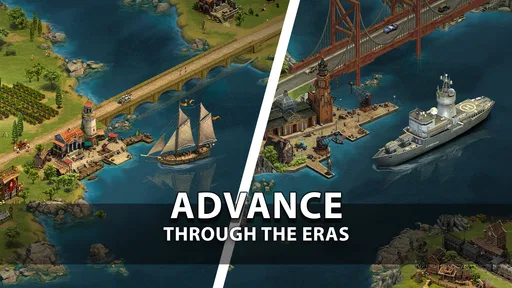
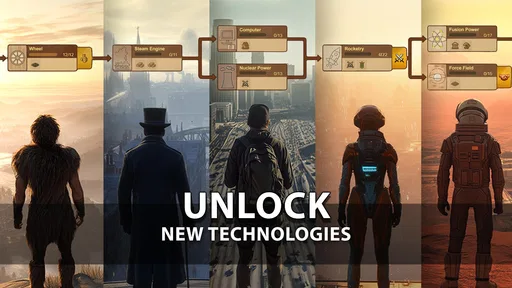
So, what’s the deal with Forge of Empires? It all kicks off with you stepping into the shoes of a leader in the Stone Age. Your mission? To build and expand your city through various epochs, all while tackling challenges, managing resources, and engaging in battles. The game lets you experience different ages, from the Stone Age to the Colonial Age, and even beyond.
When I first launched the app, I was greeted with a beautifully designed interface. It’s intuitive and easy to navigate. The tutorial is super helpful, especially if you're new to this genre. It guides you through the basics of city building and resource management without overwhelming you with too much information at once.
Building and Expanding Your Empire
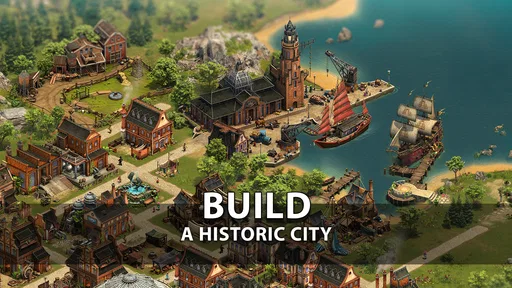
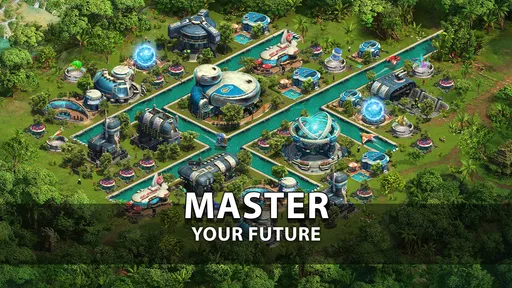
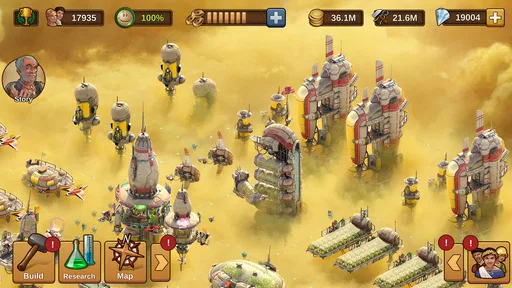
The core of the game is, of course, the city building. You start with a tiny village and have to expand it into a sprawling metropolis. This involves constructing various buildings, from residential homes to production factories. Each building serves a purpose, and balancing what you build is crucial to your success.
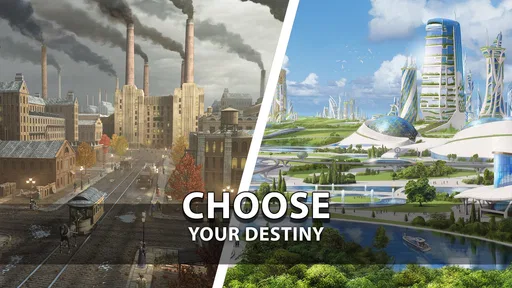
One thing I really appreciate is the attention to detail in the buildings. As you progress through the ages, the architecture evolves. It’s fascinating to see your city transform from primitive huts to grandiose castles. The graphics are really top-notch and add a lot to the immersive experience.
Resource Management and Strategy
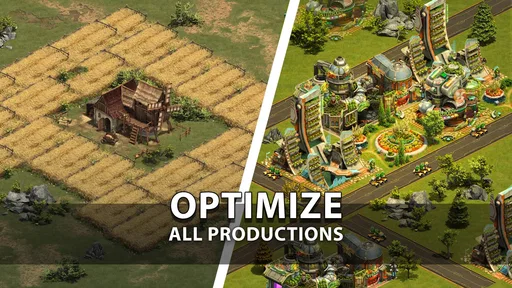
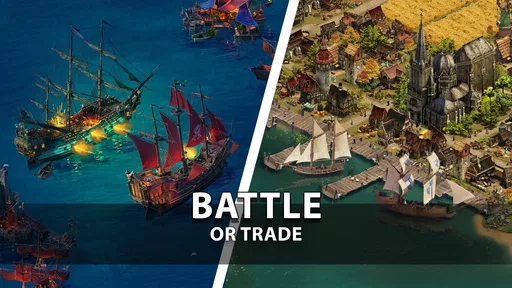
Now, let’s talk resources. Managing resources effectively is key to thriving in Forge of Empires. You'll need to gather materials, produce goods, and trade with other players. The game does a great job of making this complex system accessible, but it still requires strategic thinking to optimize your production and trade routes.
One of the most exciting aspects is the PvP (Player vs. Player) battles. You can engage with other players in strategic turn-based combat. It’s not just about having the biggest army; you need to think tactically to outsmart your opponents. This adds a competitive edge that keeps the game engaging over the long haul.
Community and Social Interaction
Forge of Empires isn’t just a solo affair. The community aspect is robust, with the ability to join guilds and partake in group activities. Being part of a guild not only provides support and camaraderie but also unlocks new features like Guild Expeditions. These are cooperative challenges that require teamwork and strategy to succeed.
Chatting with other players and participating in events adds a lively social component. It’s great to see how players from around the world come together to share tips and strategies.
Final Thoughts
All in all, Forge of Empires strikes a superb balance between strategy, management, and social interaction. The game is a delightful mix of historical exploration and tactical gameplay that keeps you coming back for more. It’s perfect for anyone who enjoys a good strategic challenge with a touch of history.
Whether you’re a seasoned gamer or a newcomer, this app offers something for everyone. So why not give it a try? You might find yourself hooked, just as I did!
How it fits into an ordinary day
For me, this is easiest to enjoy as a game I return to between other things, rather than one that demands a long uninterrupted evening. I might open it during a quiet break, check what the city needs, make a considered adjustment, and leave with a clear objective for next time. That routine makes the slow-build structure feel purposeful. If I have only a few minutes, I can still think about the town’s priorities; if I want a longer session, battles and guild activities give me more to engage with.
A practical habit is to decide on one priority before changing several parts of the city. If I need a particular resource, I can focus on how production and trade can help rather than reshuffling everything at once. That keeps experimentation manageable and makes it easier to see whether a decision actually helped. It also reduces the temptation to treat every new building as an automatic upgrade, when space and balance matter as much as visual growth.
Who will enjoy the long view
I would recommend it to someone who likes having a persistent project: a city that reflects earlier choices and provides fresh goals as it develops. It is especially appealing if you enjoy both management and a little tactical competition, or if the idea of seeing architecture change across eras is part of the fun. The social side can also suit players who enjoy exchanging advice and cooperating rather than keeping every part of a strategy game to themselves.
I would be more cautious if you dislike gradual progress, prefer every session to have a clean finish, or want a game focused only on decorating. The historical setting gives the city personality, but the central appeal is still managing growth and making strategic choices. Likewise, players who do not want interaction with a community can focus on the city, but they would be setting aside one of the game’s notable dimensions. A more self-contained tactics game is likely the better choice if combat is all you want.
Small choices that prevent wasted effort
One trade-off I notice in city builders is that expanding can look like progress even when it creates extra management without solving a current problem. Here, I get more from asking what the next step requires before placing or pursuing something new. The same mindset helps with resource planning: think about what you intend to use, then build toward that need, instead of producing or trading without a purpose. These are simple habits, but they make the strategy feel more deliberate.
It is also worth separating visual satisfaction from practical value. I enjoy watching the city’s style evolve, yet a good-looking layout does not automatically mean the settlement is prepared for its next challenge. When I have to choose, I favor a functional arrangement that supports my goals and treat cosmetic satisfaction as a bonus. That balance is part of what distinguishes this from a builder where appearance is the main objective.
Choosing a comfortable pace
The key question for a new player is not whether the game has enough systems to explore, but whether its ongoing rhythm feels enjoyable. I would try it without assuming that every activity needs attention at once. Follow the tutorial, learn the basics of the city, and see whether the next goal makes you curious enough to return. If it does, the gradual progression can be rewarding; if you find yourself checking in out of obligation, it may be a sign that a shorter, round-based strategy game fits better.
Guilds and cooperative challenges add a social reason to stay involved, but they also make the experience less solitary. I would join that side of the game because I wanted shared play, not simply from fear of missing out. Players who prefer independent planning can still appreciate the city and its development, while those who enjoy comparing approaches may find that community advice helps them think through choices they would otherwise make alone.
My progression verdict
Released on March 24, 2015, and now at version 1.329.15, Forge of Empires has the kind of structure that rewards patience more than speed. In my view, its strongest loop is the connection between a visible historical transformation and practical decisions about how the city should work. Its friction is the same one that comes with a long-running strategy game: progress can feel measured, and the many reasons to return may not suit someone who wants a self-contained experience.
I would give it a try if you like building with a purpose, planning around resources, and watching a settlement evolve while you learn its strategic layers. I would skip it if you want quick victories, a purely decorative sandbox, or a game that never nudges you toward another long-term goal. For the right player, the appeal is not simply reaching a later era; it is gradually getting better at deciding what the city needs next.
Pros
- Engaging city-building mechanics.
- Diverse historical eras to explore.
- Strategic battles add depth.
- Regular events and updates.
- Strong community involvement.
Cons
- Requires constant internet connection.
- Can be time-consuming.
- Some tasks feel repetitive.
- In-app purchases can be expensive.
- Graphics may lag on older devices.
FAQs for Forge of Empires: Build a City
What is the main objective of Forge of Empires?
In Forge of Empires, the primary objective is to build and expand your city through different historical eras. Players start in the Stone Age and progress through various periods by researching new technologies, constructing buildings, and managing resources. The goal is to develop a thriving civilization while competing with or collaborating with other players.
Is Forge of Empires free to play?
Yes, Forge of Empires is free to play. However, it includes in-app purchases that can enhance the gaming experience. Players can buy premium currency to speed up progress or acquire special items. While these purchases are optional, some players may find them useful for faster advancement in the game.
What platforms is Forge of Empires available on?
Forge of Empires is available on both Android and iOS platforms. It can be downloaded from the Google Play Store for Android devices and the Apple App Store for iOS devices. Additionally, the game is accessible through web browsers, allowing players to enjoy it on their computers as well.
How does multiplayer interaction work in Forge of Empires?
Forge of Empires offers a rich multiplayer experience where players can interact by forming guilds, trading goods, or engaging in battles. Players can visit and support each other's cities or compete in PvP battles. Guilds provide a sense of community and can offer strategic advantages in competitions and events.
Are there any system requirements for Forge of Empires?
For a smooth experience, Forge of Empires requires a stable internet connection and a device running the latest version of Android or iOS. While the game is designed to work on a wide range of devices, having a device with updated software and sufficient storage space ensures optimal performance and a more enjoyable gaming experience.


